A path for mind, body and spirit
Qigong practice draws from centuries-old Chinese traditions that emphasize gentle movement, breath, sound and focused awareness.
These practices help cultivate the body’s natural life energy, known as qi.
Practiced with intention, qigong practice supports physical health, emotional stability and spiritual well-being while helping ground how we move through daily life.
Rather than fixing or forcing the body, qigong works by rebuilding a relationship with your own energy, one shaped by listening, feeling and trust.
My name is Joy Bauer. I am a master teacher with the Ling Gui International Healing Qigong School and bring years of training and lived practice to this work.
In addition to qigong practice, my approach is informed by Taoist, Buddhist and related traditions that observe how energy moves through time, space and everyday life.
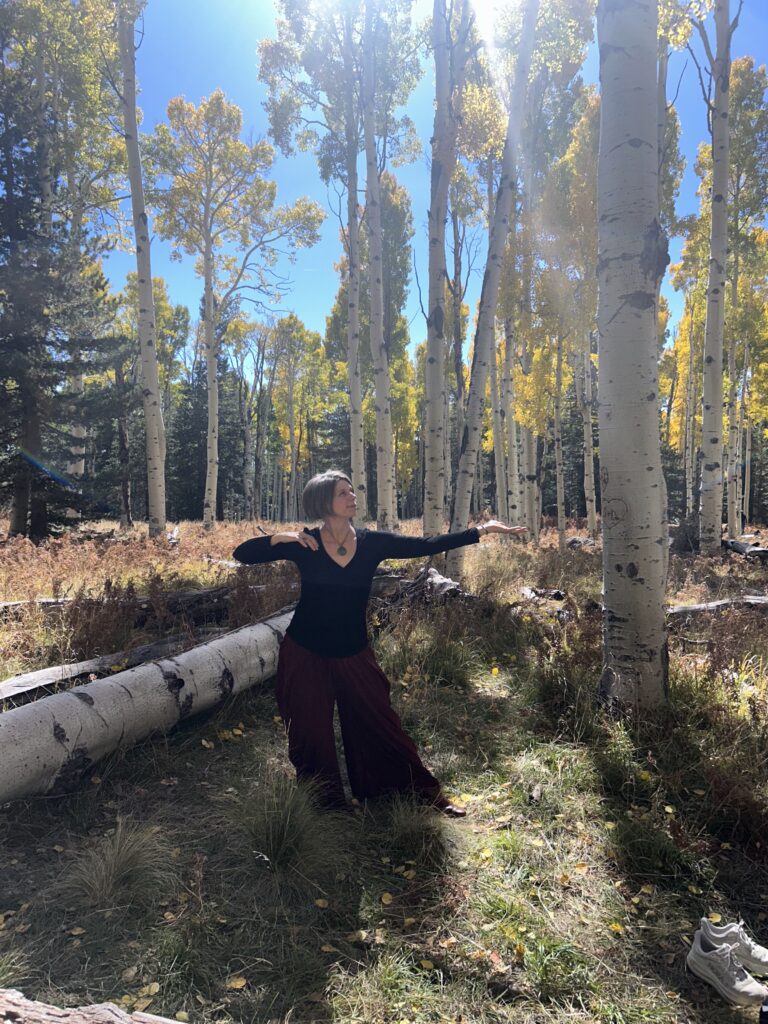
Qigong as moving meditation
Qigong is often described as a moving meditation.
As the body moves and the breath settles, the mind quiets.
Awareness turns inward and people often begin to sense the subtle rhythms and pathways of energy within the body.
This awareness allows qi to circulate more freely, easing tension on both physical and emotional levels.
The practice is gentle yet profound, meeting you where you are rather than demanding effort or force.
Qigong practice is less about doing and more about developing a clear way of relating to your energy and the world around you.
How practice supports the whole person
Qigong works with the whole person. While each individual’s experience is unique, regular practice can support physical, emotional and internal balance over time.
- Reduce stress and calm the mind
- Improve balance, flexibility and coordination
- Enhance circulation and immune function
- Ease chronic tension and pain
- Support emotional regulation and resilience
- Boost longevity
These benefits arise gradually through consistency, awareness and patience — qualities cultivated through the practice itself.
Listening to what’s already there
I approach qigong as a lived practice, not a technique to master or a quick fix. My role is to offer guidance, structure and space so people can form their own relationship with the practice.
Sessions are adapted to the individual, honoring each person’s body, energy and life circumstances.
When someone begins to live from a more expansive sense of connection, it often changes how they move through the world. Over time, that shift extends outward, reshaping relationships and daily life.
Additional ways I support practice
Alongside qigong practice, my work is informed by classical Chinese systems that illuminate how energy moves through time and space.
BaZi, or Four Pillars astrology, offers insight into an individual’s underlying energetic patterns. It can help clarify strengths, challenges and areas where balance or additional support may be helpful — especially during periods of transition.
Feng Shui works with the relationship between a person and their environment. By adjusting how space supports qi flow, it can help you navigate challenges more easily while opening space for new opportunities to emerge.
These systems are not used to predict or control outcomes but to deepen understanding. When integrated thoughtfully, they help people work with the conditions of their lives rather than against them.
If this approach resonates, individual sessions offer a way to begin.